
Howdy, Sniha

Behind every high-quality sportswear product is a manufacturing process that combines creativity, technical expertise and attention to detail.
From professional football jerseys to comfortable tracksuits and training apparel, custom sportswear manufacturing allows brands, teams and businesses to create clothing that reflects their identity while meeting specific performance requirements.
At Sulzburg Sports, we understand that successful apparel manufacturing is about more than producing garments. It is about delivering the right combination of design, comfort, functionality and quality.
- Understanding the Customer’s Requirements
Every custom sportswear project starts with understanding the customer’s vision.
Before production begins, manufacturers need to identify the intended product, target audience, preferred materials, design requirements and order specifications.
Important considerations include:
- Type of sportswear required.
- Preferred colours and designs.
- Fabric specifications.
- Size and fitting requirements.
- Branding and customization details.
- Quantity and delivery expectations.
A clear understanding of these requirements helps establish a smooth manufacturing process.
- Fabric Selection and Material Quality
Fabric selection plays a major role in the performance and appearance of sportswear.
Different activities require different material characteristics. For example, training apparel often benefits from lightweight and flexible fabrics, while casual sportswear may prioritize softness and everyday comfort.
Popular materials include:
Polyester: A durable and lightweight option widely used in athletic clothing.
Cotton: Known for its softness and comfort, especially in casual apparel.
Spandex: Provides flexibility and stretch for active movement.
Blended Fabrics:Combine different material properties to achieve specific garment requirements.
Selecting suitable fabrics helps ensure the finished product meets its intended purpose. - Design Development and Customization
One of the biggest advantages of custom sportswear is design flexibility.
Brands and sports organizations can create apparel that reflects their unique identity through colours, patterns, logos, graphics and other design elements.
Customization options may include:
- Screen printing.
- Embroidery.
- Sublimation printing.
- Custom labels and branding.
- Personalized team names and numbers.
The right design approach depends on the garment, fabric and desired finish.
- Cutting and Stitching
Once the design and materials are finalized, the manufacturing process moves into garment production.
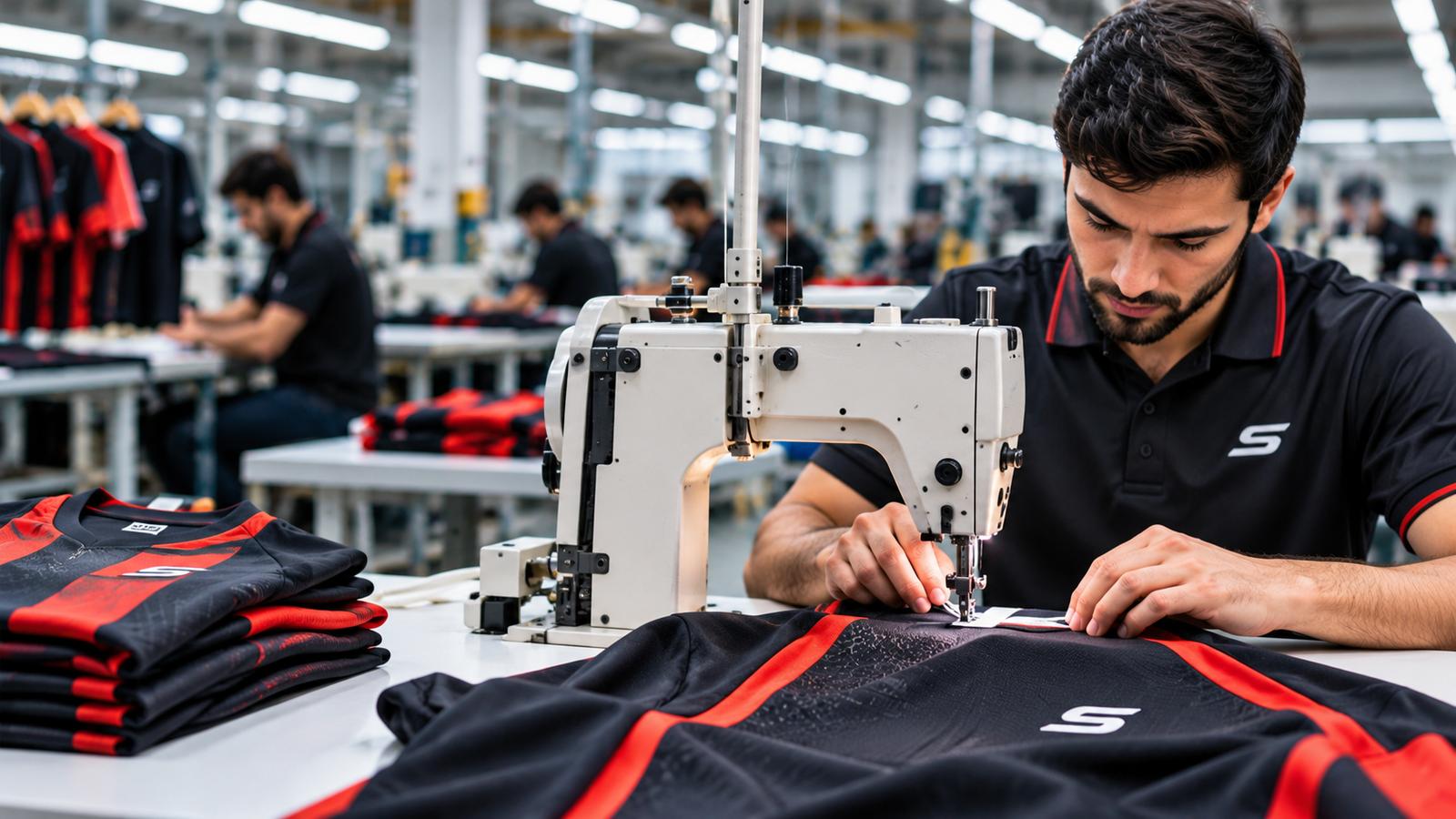
Fabric is carefully cut according to approved patterns and measurements. Individual components are then assembled through stitching and garment construction.
Accurate cutting and consistent stitching are essential for achieving the desired fit, appearance and durability.
Attention to detail during this stage helps maintain consistency across production batches. - Quality Control and Finishing
Quality control is an important part of professional sportswear manufacturing.
Before garments are prepared for delivery, they should be checked for:
- Stitching consistency.
- Fabric defects.
- Accurate sizing.
- Print and embroidery quality.
- Colour consistency.
- Overall finishing.
Proper inspection helps identify production issues and ensures that finished apparel meets the agreed specifications.
- Packaging and International Export
For international buyers, packaging and export preparation are important parts of the manufacturing journey.
Finished garments are organized, packed and prepared according to customer requirements.
A professional manufacturing and export partner should understand product specifications, packaging expectations and relevant shipping documentation.
Clear communication throughout the process helps businesses manage international sourcing more effectively. - Choosing the Right Sportswear Manufacturing Partner
Finding a reliable sportswear manufacturer can make a significant difference to your business.
Before choosing a supplier, consider their manufacturing experience, product range, customization capabilities, quality management and communication standards.
A dependable partner should understand your requirements and work toward delivering consistent products that meet your expectations.
Why Choose Sulzburg Sports?
Sulzburg Sports brings experience in the apparel manufacturing and export industry, with roots dating back to 2001.
Our product range covers sportswear, casual wear, workwear and gloves, including:
- T-shirts and polo shirts.
- Hoodies and sweatshirts.
- Tracksuits and training apparel.
- Football and basketball uniforms.
- Baseball jerseys and sports shorts.
- Custom apparel solutions.
We focus on combining product quality, practical functionality and manufacturing expertise to serve customers across international markets.
Final Thoughts
Custom sportswear manufacturing requires careful planning, suitable materials, skilled production and consistent quality control.
Whether you are developing a sportswear brand, sourcing team uniforms or expanding your apparel business, choosing the right manufacturing partner is an important step toward success.
Looking for custom sportswear manufacturing solutions?
Connect with Sulzburg Sports to discuss your apparel requirements and explore manufacturing possibilities.
Sulzburg Sports – Quality, Comfort & Performance.